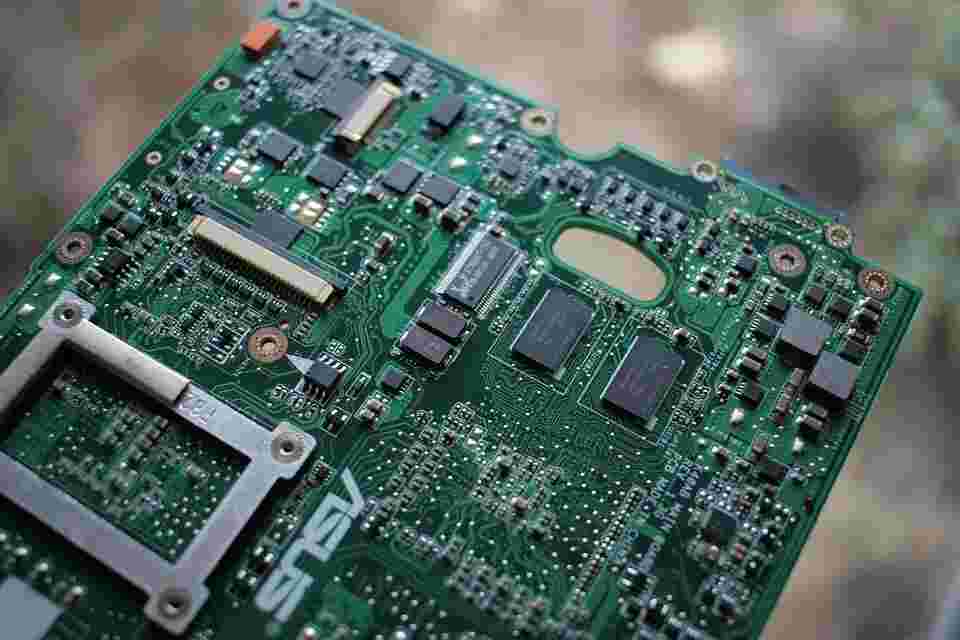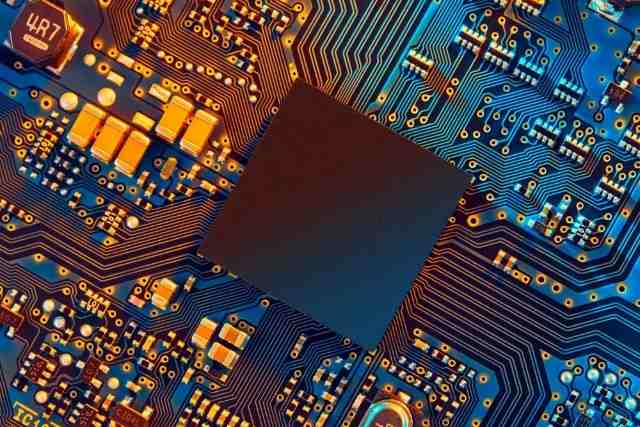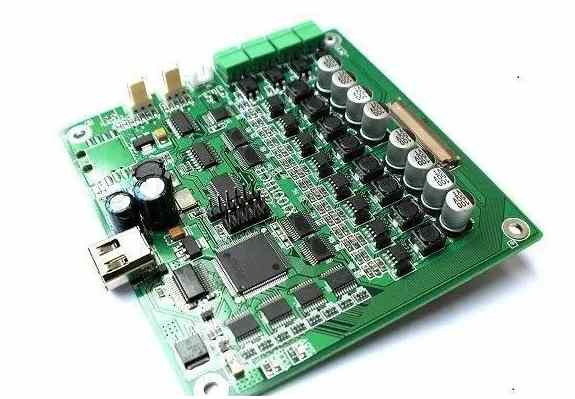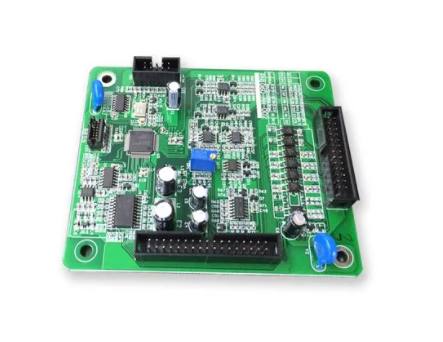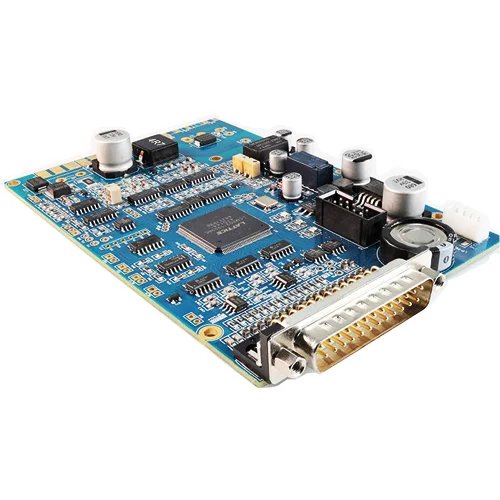

PCB vs chip describes different parts: a printed circuit board supports and connects components, while an integrated circuit performs electronic functions on a semiconductor die. Here, "chip" means an IC. Distinguishing a bare board, packaged IC and assembled PCBA helps you order the right item.
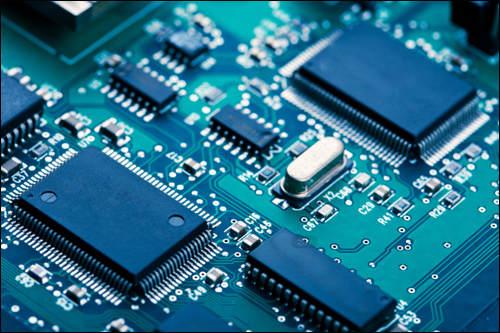
PCB vs chip: what the terms actually mean
Buyers and engineers often use "chip" and "circuit board" as if the two words describe the same thing. They do not, and most of the confusion starts with imprecise acronyms.
PCB — printed circuit board. A bare PCB is an insulating substrate, commonly FR-4, patterned with conductive copper traces, pads and vias. A conventional bare board has not yet been populated with the components specified for assembly. Its job is mechanical support plus electrical interconnection: it holds every part in position and routes signals and power between them. Boards are produced in single-sided, double-sided and multilayer constructions.
IC — integrated circuit, or "chip." An IC is a semiconductor device: transistors and similar structures fabricated on a semiconductor die — most commonly silicon — and, in the form normally used in mainstream PCBA, enclosed in a package with external terminals in the form of leads, pads or solder balls. Note that "IC" does not mean "all electronic components." Resistors, capacitors, inductors, connectors and switches are electronic components, but they are not integrated circuits.
PCBA — printed circuit board assembly. A PCBA is the bare board after components — the parts specified for that assembly — have been attached to it. A finished product may contain several PCBAs plus enclosures and cabling; the PCBA itself stops at the assembled board.
Three related terms are frequently treated as interchangeable when they are not:
- Die. The piece of semiconductor material itself, whether handled as a bare die or enclosed in a package. Most mainstream PCBA purchases specify packaged ICs rather than bare dies; bare-die assembly is possible but requires a separate process scope.
- Package. The housing that protects the die and connects it to the board through leads, pads or balls. Package styles differ in terminal layout and assembly requirements, so footprint and process have to be matched deliberately.
- Chipset. A group of ICs designed to work together, for example on a computer motherboard. A chipset is not a single chip, and "chip" does not automatically mean "chipset."
Comparison matrix: bare PCB vs IC vs PCBA
| Item | What it is | What it contains | Who supplies it | Typical ordering input |
|---|---|---|---|---|
| Bare PCB | Insulating substrate patterned with copper traces, pads and vias | No active components | Board fabricator | Gerber or ODB++ data, drill file, stackup and material specification, surface finish, quantity |
| Packaged IC | Semiconductor device enclosed in a package with external terminals | A semiconductor die or dies, package structure and terminals | Component manufacturer or authorized distributor | Manufacturer part number, package style, quantity |
| PCBA | Bare board with components attached | The board and the components specified by its BOM | Assembly provider | BOM, fabrication data, placement data, assembly drawings and test requirements |
Two supply chains sit behind that matrix. Bare-board fabrication and semiconductor manufacturing use different equipment, different data formats and different qualification systems, so a supplier that is strong in one is not automatically a source for the other. There is also no universal ranking between a board and a chip by cost, size or layer count: each design defines its own requirement, and any fixed "one is always cheaper or smaller" claim should be treated with caution.
How a packaged IC connects to a board
A surface-mount IC attaches to matching copper lands. A through-hole IC has leads inserted into plated holes, where solder joins the leads to the board. The board's traces then carry signals between that IC and the rest of the circuit, while vias connect traces across layers.
In a design that uses ICs, board layout decisions affect how those devices operate in the finished product. Trace geometry, layer stack and return-path design all influence signal behavior, and the package footprint constrains what the layout can do. Our PCB return-path design guide covers the board-side considerations in more depth.
The assembly process itself — paste, placement, reflow and the steps that follow — is a topic of its own. Our PCB assembly services page gives a brief overview; use it to discuss assembly scope with the prepared files below.
What manufacturing and assembly require
For bare-board fabrication, the standard inputs are fabrication data (Gerber or ODB++ plus drill files), a stackup and material specification, surface finish and quantity. For assembly, add the bill of materials, placement data, assembly drawings and the test scope you want performed. Confirm firmware and component-substitution responsibilities where applicable.
It also helps to be explicit about scope. A board fabricator fabricates and supplies the bare board, and an assembly provider attaches components to it; semiconductor dies are fabricated by semiconductor manufacturers, and components reach the assembly floor through the component supply chain. This article covers PCB fabrication and assembly; component sourcing is a separate step, so confirm with each supplier which items it makes and which it procures.
Purchasing checklist and next step
Work through this checklist before requesting a quote, so the quote matches what you need.
- Identify what you hold today: design files only, a bare board, a populated board, or loose components.
- Decide the target item — bare boards, assembled boards, or components. Most projects need more than one.
- For bare boards: assemble the Gerbers, drill file, stackup and material specification, finish choice and quantity.
- For assembled boards: add the BOM, placement data, assembly drawings and the test scope to be quoted.
- For components: compile manufacturer part numbers, package styles and quantities, and buy through authorized distribution.
- Confirm each supplier's scope — who fabricates, who assembles, who supplies the silicon — before committing.
If assembled boards are the next step, use the assembly services page to start a discussion about the product, quantity and files you already have. Agree missing technical inputs and the quoted scope before production.